

How Recaps Are Helping Audiobook Fans Stay Connected
Paul Bennett, a research director at Spotify, explains why we built Recaps for audiobooks.
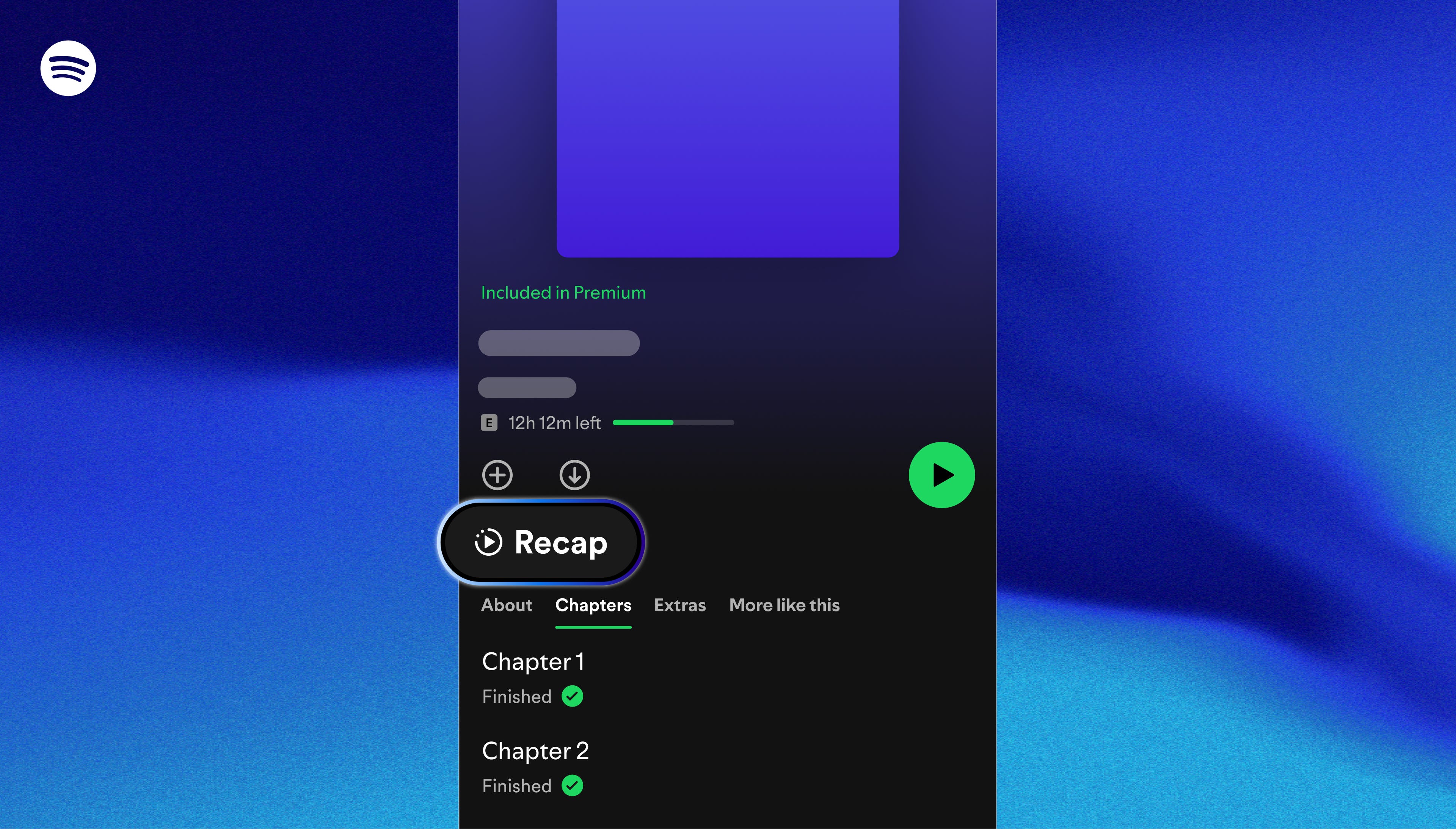
I’ve always loved stories, especially the kind that linger and stay with you long after they end. But amid a busy life, even the best ones can slip away. I’d start an audiobook on a vacation, take a break, and come back days later unsure where I’d stopped. The rhythm was gone, the details blurred. For a long time, that gap kept me from finishing as many books as I wanted to.
Recaps grew out of that type of very human experience. Our team wanted to make it easier for listeners to return to the stories they start. It’s a simple idea that makes a real difference. When you open an audiobook you’ve been away from, Spotify now offers a short recap that reminds you what has happened so far without spoiling what comes next. It’s like the “previously on” moment in a favorite TV series, a quick way to rejoin the world of the story and remember why it pulled you in in the first place.
This feature is part of something bigger we’re building at Spotify. Audiobooks are one of the most powerful ways to experience storytelling, but they require time, attention, and memory. People today listen in small bursts, between other parts of their lives. Recaps meet listeners where they are. They lower the barrier to returning to a book, helping more people finish what they begin and allowing authors’ full stories to be heard as they were meant to be.

Creating Recaps required a mix of technical invention and careful respect for creative work. At its core, the feature uses a large language model to generate a recap that fits where a listener left off. That approach is what makes the experience feel natural. But books are long and varied, so we had to design a system that could create these moments efficiently and responsibly. We built what we call a memoized context pipeline, which lets the model remember parts of its own reasoning without reprocessing everything from scratch. That approach makes the process many times faster and more sustainable.
Still, technology alone was never the full story. From the start, we worked closely with industry partners to make sure Recaps respected their creative contributions. Many of our partners told us they were interested in and excited by the concept of Recaps but not comfortable with a model that stored the book’s data in the model’s weights. We honored that request. Our system does not train on any book’s content, and it does not imitate narrators’ voices. We created a neutral voice that feels comfortable to hear and distinct from the performance of the book itself.
It’s important to note that a Recap is not meant to be a full book summary, which condenses a story into its key ideas. A Recap revives memory. It brings back small but meaningful details that help the listener reenter the world of the book. The texture of a conversation, a name mentioned in passing, the sound of a setting. These are the things that help you feel as if you had never left. That balance between big-picture context and specific reminders is delicate, and we continue to learn from feedback about how to get it right for different types of stories.
Working on this project has changed how I listen to audiobooks myself. Before Recaps, I loved reading but often lost the thread when listening. Now, audiobooks have become part of my daily life. It has opened up new spaces in my routine for stories, and I’m hearing from others at Spotify who feel the same way. Recaps turned frustration into possibility, and that shift feels deeply meaningful to me.
For authors and publishers, this feature can help stories reach wider audiences and encourage deeper engagement. More completions mean more readers experiencing a full arc of emotion, character, and craft. For listeners, it means reconnecting with the joy of storytelling in a way that fits real life.
We are still in the early stages (the feature is in beta), and we plan to iterate and expand Recaps with more titles as we learn. True success will not just be about how many people use the feature, but how many find it helps them fall back in love with listening.
I believe storytelling is one of the most human things we do. Forgetting is part of that humanity too. Recaps are not meant to replace the experience of listening to an audiobook. Instead, they simply help bridge the gap between where you left off and completing a great story.